2022–2024First lab
Princess Margaret / UHN — Harding Lab
Cancer biology and DNA damage. Where research stopped being an idea and became something I actually did with my hands.
I'm Sid, a scientist working across cancer immunology, T-cells, gene editing, and AI for biology. Almost all of it points at the same thing: helping the immune system catch cancer earlier and deal with it better. Scroll to learn more about me!
Campus
Salk
Dinner
scrolla cell, a strand, a route




fig. 01 · from editing to recognition
Gene editing rewrites a cell's instructions.
These instructions help T cells last longer and fight cancer better.
And embeds logic in synthetic receptors to help them recognize it.
history · fig. 02 movement
Cancer biology and DNA damage. Where research stopped being an idea and became something I actually did with my hands.
about
When I was 13 years old, I got really interested in immunology, and specifically memory T cells and controlling their states for the sake of cancer prevention.
Over the last few years, that work has progressed, and as gene editing tools have gotten better I have learned about new ways to harness and manipulate T cells to become better cancer fighters.
I'm going to continue on this journey until we make significant progress in this field.
in the lab
outside the lab
work
A tool for designing modular genetic perturbations in T cells. The editing layer of cell engineering.
How T cells recognize cancer, and how sensitivity, specificity, and cell state (including the role of noncoding RNA and lncRNAs) shape whether recognition holds or breaks down.
Research and writing on how memory T cells may shape cancer immunoprevention.
Using computational tools to reason about perturbations, receptor designs, cell states, and experimental design.
papers
Siddhesh Mittra, Shane M. Harding, Susan M. Kaech
First-author review on how memory T cell subsets, especially tissue-resident memory and stem memory T cells, may contribute to cancer immunoprevention.
read →Work on CRISPR-All, a unified genetic perturbation language for designing and combining genetic programs in primary human cells, including T cell engineering contexts.
read →press
Kerry Howley's feature on the young founders and researchers reshaping San Francisco's AI scene. I was one of the people profiled.
read →A profile on becoming one of the youngest authors published in The Journal of Immunology. A memory T cell review that grew out of teaching myself immunology during the 2020 COVID lockdown.
read →video
How unconventional T cells fit into the picture, and what EVO 2 adds to the story.
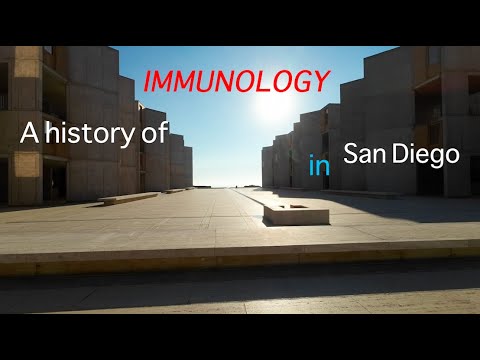
A walk through the people, labs, and ideas that shaped immunology in San Diego.
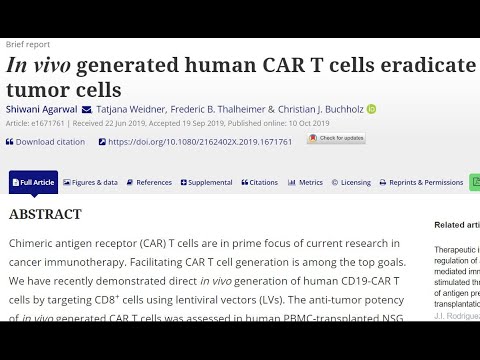
What in vivo CAR T-cell therapy is, how it differs from ex vivo approaches, and why it matters.